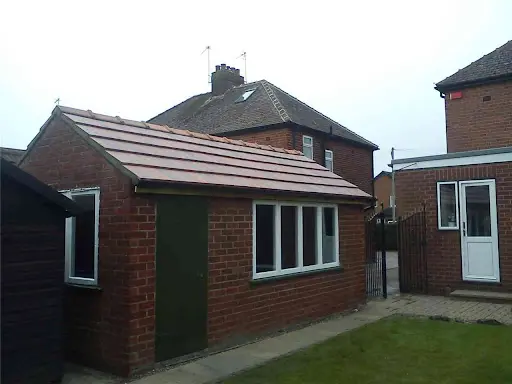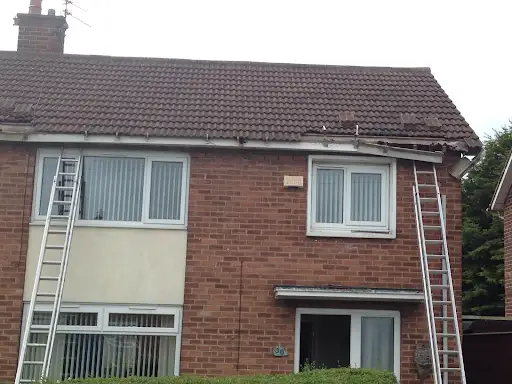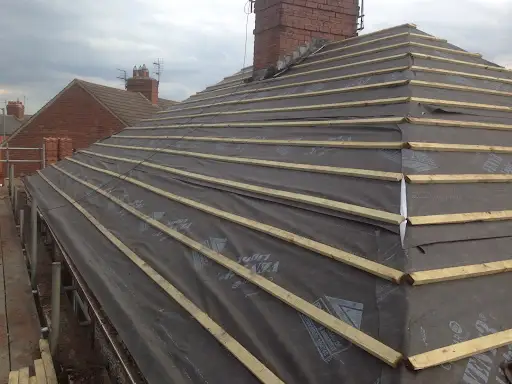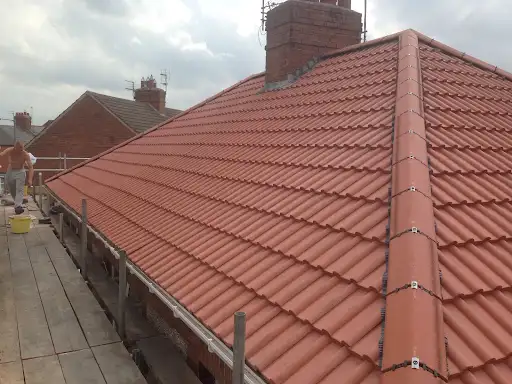
Dry ridge and dry verge systems fix ridge and gable-end tiles mechanically with clips, screws and caps instead of mortar. Since the 2014 revision of BS 5534, ridge and verge tiles on new roofs and re-roofs must be mechanically fixed — mortar alone isn't enough. Existing roofs don't have to be upgraded, but it's the most reliable fix for crumbling mortar. DG Roofing Services only fits Manthorpe systems.
Why mortar ridges and verges fail
Sand and cement mortar is rigid. As a roof moves with temperature and wind, and as water gets into fine cracks and freezes, the mortar breaks down. Eventually ridge tiles loosen and verge mortar falls out — leaving tiles exposed to the wind.
What BS 5534 says
BS 5534 is the British Standard code of practice for slating and tiling. The 2014 revision requires ridge, hip and verge tiles on new roofs and re-roofs to be mechanically fixed, rather than relying on mortar alone. Mortar can still be used for appearance, but it can't be the only fixing. Existing roofs don't have to be upgraded unless they're being re-roofed.
Benefits of dry fix systems
- No regular repointing
- Much more secure in high winds
- Ventilated ridge options help reduce loft condensation
- Neat, uniform finish
- Quick to install on most existing roofs
Why the brand matters
Cheap, unbranded dry verge caps can become brittle, discolour and crack in UV light. That's why DG Roofing Services only fits Manthorpe — the leading UK manufacturer of dry fix roofing products — matched to your tile profile.
Frequently asked questions
Is dry verge a legal requirement?
For new roofs and re-roofs, BS 5534 requires mechanical fixing of verges and ridges. Existing roofs don't have to be upgraded, but it's a worthwhile improvement.
Can dry verge be fitted without re-roofing?
Usually yes, as long as the tiles, battens and verge timbers are sound.
Does dry ridge look different?
Dry ridge gives a clean, uniform line. Ridge tiles stay the same — they're just fixed mechanically instead of bedded in mortar.
Owner of DG Roofing Services, roofing across Darlington and the North East for 30+ years. Rated 10/10 on Checkatrade from 500+ reviews.