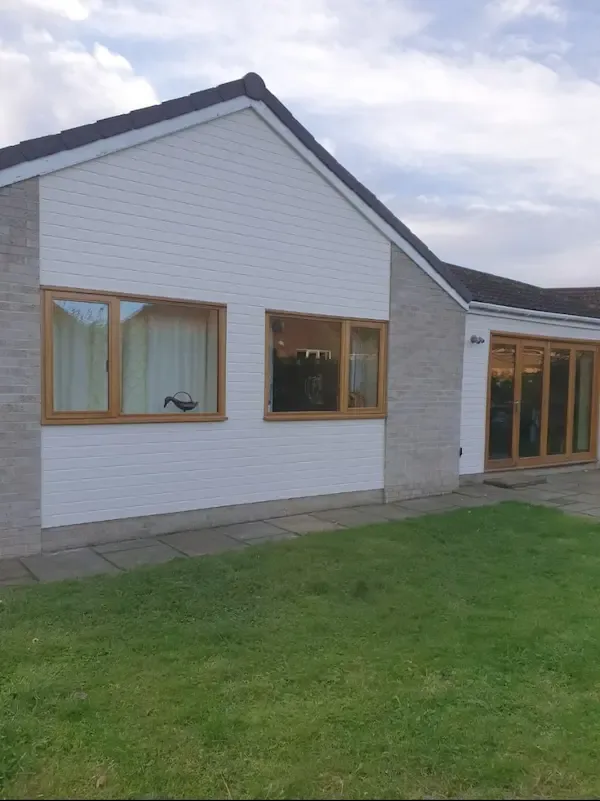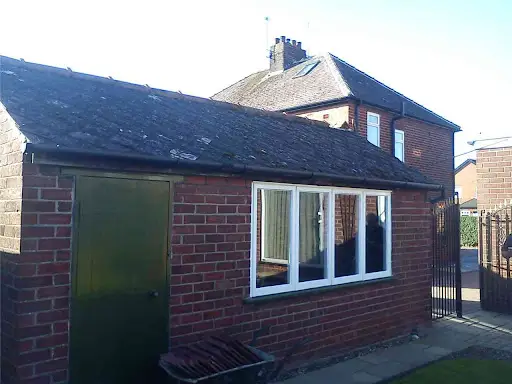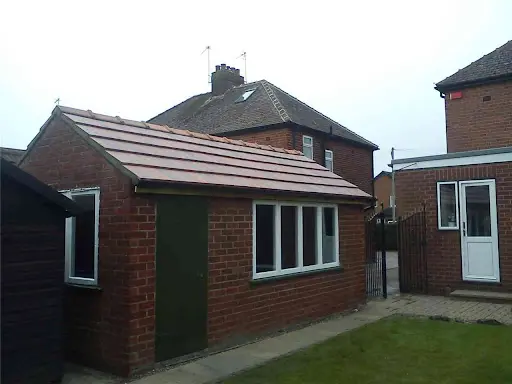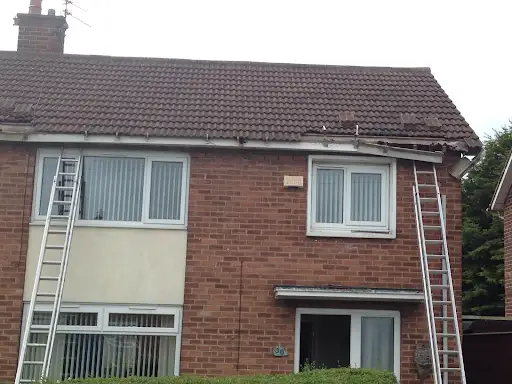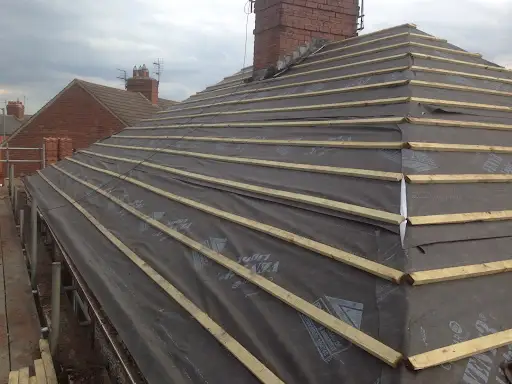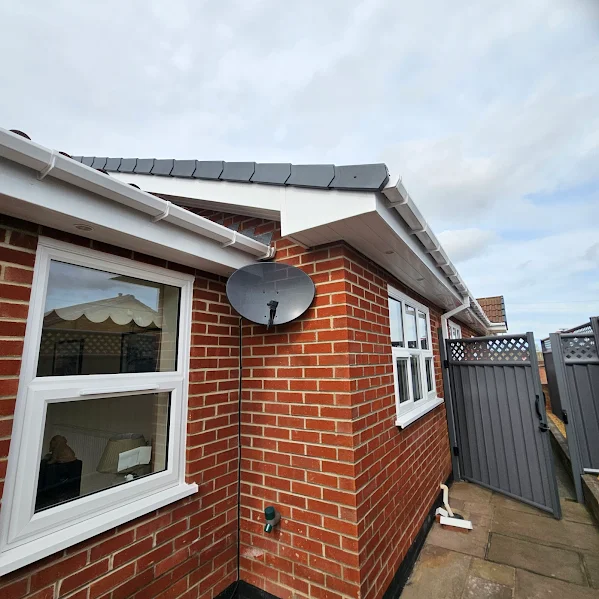
Replace your fascias, soffits and guttering if timber is rotten or flaking, gutters sag, leak or overflow, or water stains your brickwork. Full replacement is better than "capping" (cladding over old boards) because it lets the roofer repair rafter ends and fit eaves protection. UPVC roofline needs no painting and is available in white, black, grey and woodgrain.
What each part does
- Fascias: boards at the roof edge that carry the gutters and support the bottom row of tiles
- Soffits: boards underneath that close the gap and ventilate the roof space
- Bargeboards: boards on the sloping gable ends
- Gutters & downpipes: carry rainwater away from walls and foundations
Signs it's time to replace
- Rotten, split or flaking timber
- Sagging gutters or water pouring over the edge
- Leaking joints and green streaks down brickwork
- Damp patches on walls or ceilings near the eaves
- Birds or wasps nesting in gaps at the roof edge
Full replacement vs capping
Capping means fixing thin UPVC over the existing timber. It's cheaper, but hides rot that keeps getting worse, and doesn't allow the roof edge to be repaired. Full replacement removes the old boards, lets the roofer repair rafter ends and fit eaves protection membrane, and gives a roofline built to last.
Colours and finishes
White is the most popular, but anthracite grey, black and woodgrain finishes are increasingly chosen to match modern windows and doors.
Frequently asked questions
How long does a roofline replacement take?
Most houses take one to three days depending on size and timber repairs.
Do you need scaffolding?
It depends on the property height and access. Bungalows often don't; two-storey houses usually need scaffold or a tower for safe working.
Owner of DG Roofing Services, roofing across Darlington and the North East for 30+ years. Rated 10/10 on Checkatrade from 500+ reviews.